
WinzeWinze

Product · Mining

Keep the crusher fed, and price every gap.

When the primary crusher is starved, the loss starts upstream of it. Winze finds the hours the crusher ran with nothing on the belt, prices them as lost throughput and shows where the feed stopped.

Built for

  • Mine Superintendent
  • Pit and production supervisors

A conversation with Mine Superintendent

Mine Superintendent

Runs the pit and keeps the crusher fed, shift by shift · Winze chat

Illustrative

Why was the primary crusher idle on night shift?

2.4 h

running without producing · $41K lost throughput

2.4 h running without producing: starved of feed.

  • Motor drew power, belt scale read zero: 3 gaps, 01:00–04:30.
  • No crusher trip or fault; feed from the ROM pad stopped.
  • Lost throughput: $41K.

Put this in my start-of-shift report.

Added. Your 06:00 shift report now leads with feed gaps.

  • Running, not producing
  • Plain-language shift report
  • Evidence down to readings

Illustrative conversation. Figures are examples, not customer data.

What it does for Mining

Keep the crusher fed.

01

A crusher starved of feed

Motor power against the belt scale: when the motor draws power and the scale reads zero, the crusher is running without producing. Winze finds each gap, checks for a trip, a fault or a planned stop, and says plainly when none of them explains it.

How a feed gap is found
  1. 01Motor powerDrawing: the crusher is on
  2. 02Belt scaleReading zero: nothing is moving through it
  3. 03Trips, faults, planned stopsNone on record covers the gap
  4. 04UpstreamWhere the feed stopped, such as the ROM pad

02

ROM-pad feed stops, priced as lost throughput

A stop at the ROM pad shows up as hours at the crusher. Those hours, times the value of an hour of lost output, are the dollars lost, split into explained and unexplained, so a known stop is never reported as a discovery.

How a lost hour becomes dollars

Hours running without producing, times the dollar value of an hour of lost output, equals the dollars lost per site and per shift. Those dollars are split into explained, where a known cause exists, and unexplained, where Winze digs.

03

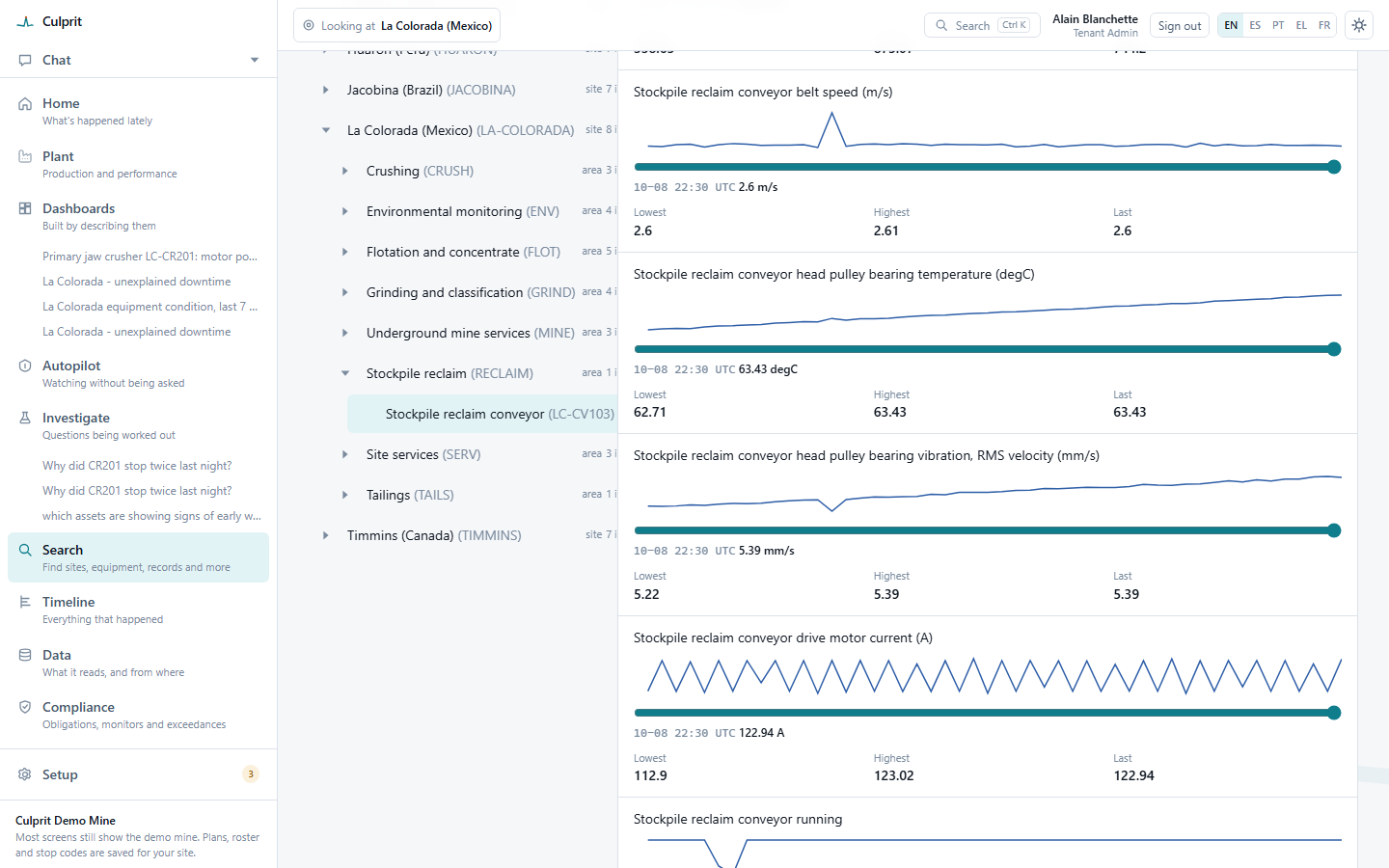
The plant tree, from the company down to one asset

One tree, one focus control: look at anything from the whole company down to one site, one area or one asset, or at nothing in particular. It only ever narrows what the screens show; it never widens what a role may see.

The plant tree: sites, then areas such as Crushing, Grinding and classification and Stockpile reclaim, down to one conveyor, with that conveyor’s live readings beside it
Sites, areas and assets in one tree; open an asset to see its readings.

What it reads

The signals and sources behind every answer.

Read-only by design: nothing writes to your control systems.

  • Crusher motor power and current

    From the OPC-UA server already on site, read-only.

  • Belt scales and weightometers

    So running and producing can be told apart.

  • Feeder and conveyor run state

    To find where along the feed the stop began.

Not yet shipped

Fleet systems are on the roadmap, not shipped

Winze reads the crusher, feeder and conveyor signals on your OPC-UA server today. Integration with fleet-management systems is on the roadmap and not yet shipped, so a feed gap is traced as far as the ROM pad, not to a truck or a shovel.

Next step: a pilot on one site.

See it on your own plant. Book a pilot and we’ll run it with you on one site: the unexplained loss on your plant, priced, with its evidence.

  1. 01

    Connect one site

    OPC-UA, read-only, one command on site

  2. 02

    Run it for 90 days

    Chat, shift reports and Scheduler tasks

  3. 03

    Review the findings together

    The unexplained loss, priced, with its evidence

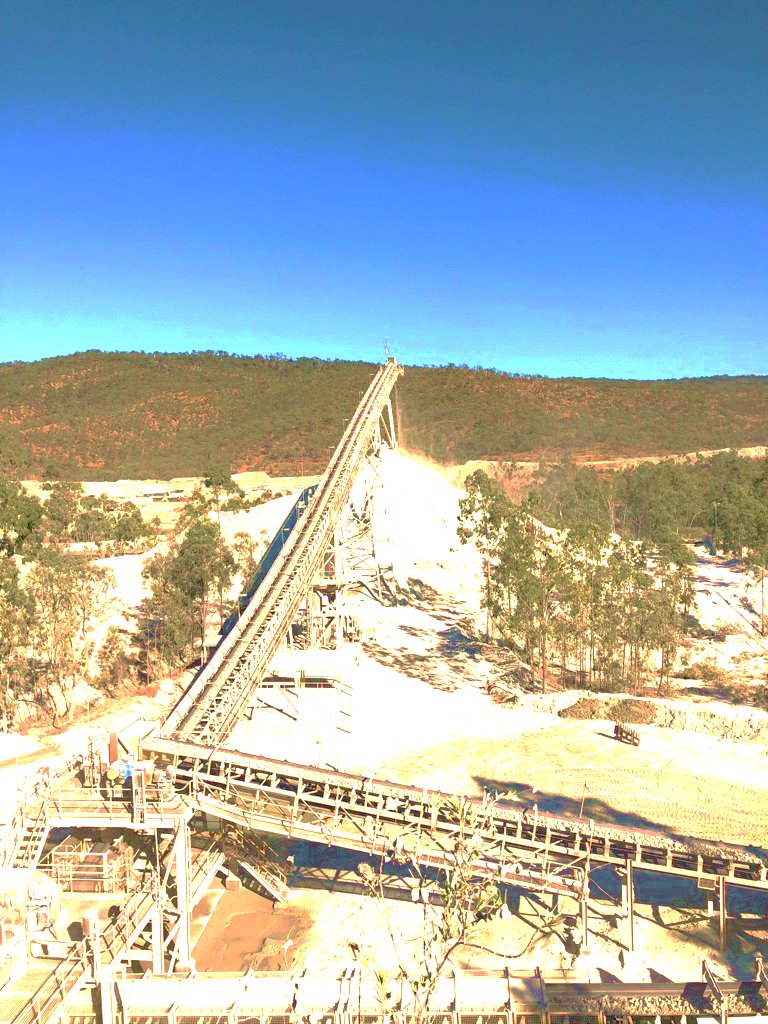
A conveyor running up from a processing plant at a mine site